
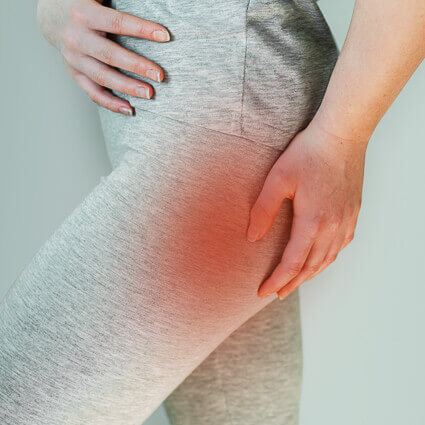
 If you’ve searched online for ways to ease sciatica, you’ve probably come across the “tennis ball trick.” For some people, applying gentle pressure to tight muscles in the buttock can provide temporary relief.
Sciatica isn’t a diagnosis itself; it’s a symptom. A tennis ball may help ease muscle tension, but it won’t address every cause of sciatic pain. At Vitality Semaphore, we focus on identifying the factors contributing to your symptoms before recommending care.
What Is Sciatica?
Sciatica occurs when the sciatic nerve becomes irritated or compressed. Symptoms often begin in the lower back or buttock and travel down the back of the leg. They may include:
- Sharp or shooting pain
- Burning or tingling
- Pins and needles
- Numbness
- Weakness in the leg or foot
Symptoms vary in intensity and can come and go or become more persistent.
Why Can a Tennis Ball Help?
Tight muscles around the hips and buttocks can place extra pressure on nearby tissues. Applying gentle pressure with a tennis ball may help ease muscle tension and encourage circulation.
It is commonly used for tight gluteal muscles, trigger points, piriformis tension and stiffness after prolonged sitting. Any relief is usually short-term. If symptoms are linked to a disc issue, reduced spinal mobility, joint irritation or another underlying condition, a tennis ball alone is unlikely to address the cause.
Assessing the Cause of Sciatica
Sciatica may be associated with bulging or herniated discs, age-related disc changes, reduced spinal mobility, joint irritation or muscle imbalances.
Your Semaphore chiropractor will assess your health history, symptoms, movement and spinal function before discussing suitable options. Depending on your presentation, care may include chiropractic care, mobility exercises, posture advice and practical lifestyle recommendations. Spinal decompression may also be considered for some disc-related conditions.
When to Seek Professional Advice
Consider booking an assessment if pain travels below your knee, continues for more than a few weeks, keeps returning or affects walking, sitting, sleep or daily activities. Seek urgent medical attention for sudden bowel or bladder changes, numbness around the groin or rapidly worsening leg weakness.
Get Help Managing Sciatica
A tennis ball can ease temporary muscle tightness, but identifying the reason for your symptoms helps guide more appropriate care. The team at Vitality Semaphore can assess your concerns and discuss suitable next steps.